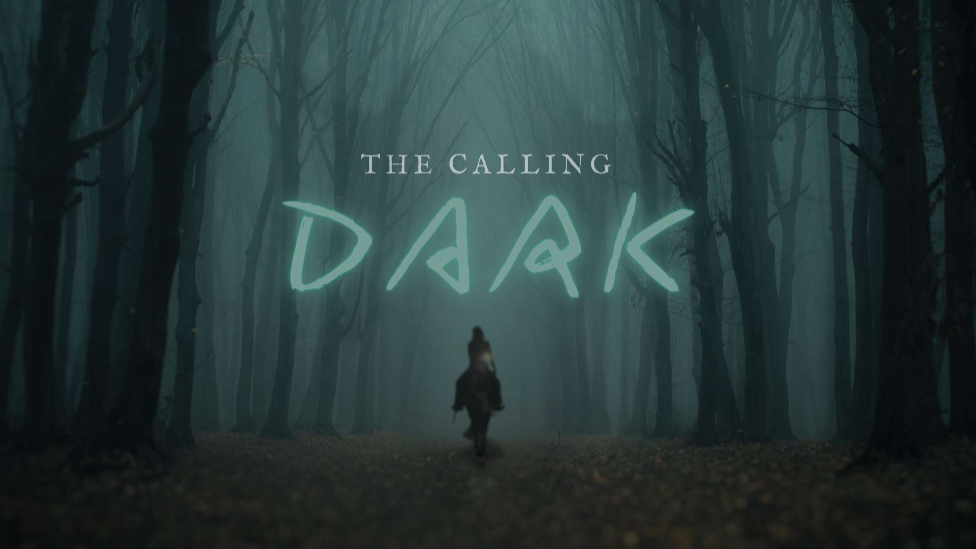
A pitch deck exists to answer one question fast: why should anyone care about this world? Below is the one I built for The Calling Dark - the atmosphere, the characters, the systems — but here's some of the thinking behind the choices that shaped it.
I wanted Appalachia to feel less like a backdrop and more like a held breath - fog-thick forests, half-lit cabins, the sense that something is always just outside the treeline, watching. Every mood board image I chose was in service of one feeling: that the natural world and the spirit world in this game were never really separate to begin with. The Native folklore woven through the setting isn't decoration; it's the actual logic the world runs on.
I didn't want N'koa's mother's tribe to exist as a vague "mystical people" trope - so I built the Aniwaya with their own invented language, Mahkeya, specifically so their culture could have interiority a player earns access to, the same way N'koa does. Language became the clearest way to dramatize her outsider status: she doesn't speak it fluently at first, which means the player doesn't either. Acceptance isn't handed to her - or to you - it's built line by line.
N'koa's story runs through three very different models of love and protection - Abram and Sarah's gentle, aging devotion; Takoda's fierce, guilt-laced parenting; and a mother, Sequoyah, who's present only as absence and inheritance. I wanted every one of those relationships to hand N'koa something different: safety, burden, and legacy, respectively. None of them are simple, and I didn't want any of them to be.
This was the system I cared most about getting right, because I never wanted it to feel like a bolted-on skill tree. Spirit Sight starts small and costly - basic tracking, short range, high energy drain - and only opens into something powerful (spirit communication, time echo viewing) once N'koa has earned the tribe's trust and her own. Mechanically and narratively, the ability grows at the same pace as her belonging. That alignment was the whole point.
Stealth, archery, resource-gathering, and horse-bonding all exist to reinforce the same idea - survival here depends on relationship, not domination. You don't overpower this world; you learn to move through it without breaking its rules. The horse especially mattered to me: not a vehicle, but a bond the game treats as genuinely load-bearing to the story.
[A quick note on the deck itself: character portraits were AI-generated as placeholder visualization for pitching purposes, not final art direction]
